
Is Lasik Eye Surgery Safe ?
Is Lasik Eye Surgery Safe ?
If you are tired of relying on glasses or contact lenses, you have likely asked yourself, Is LASIK eye surgery safe ? The short answer is yes. LASIK is widely recognized as one of the safest, most effective, and most frequently performed elective procedures in modern medicine. Over the past few decades, advancements in diagnostic mapping and ultra-high-speed laser technology have transformed laser vision correction into a highly personalized and exceptionally precise treatment.
But is lasik eye surgery safe for everyone? Like any surgical procedure, LASIK has potential benefits, risks, and limitations. Patient selection, a thorough preoperative evaluation, the health of the eyes, and the technology used during treatment can all influence the outcome.
In this comprehensive guide, we explore how modern LASIK eye surgery works, what makes the procedure precise, its safety profile, potential risks and side effects, and the latest technologies helping eye surgeons provide personalized vision correction.
Is LASIK Eye Surgery Safe With Modern Lasik Techniques?
Modern laser eye surgery treats standard refractive errors—such as myopia (nearsightedness), hyperopia (farsightedness), and astigmatism—by reshaping the clear front surface of your eye (the cornea) so that light focuses properly onto the retina.
The procedure is considered extremely safe for several reasons:
- Painless and Bladeless Experience: Modern techniques utilize advanced lasers for every step of the procedure, eliminating the need for traditional blades. Numbing eye drops ensure the patient remains comfortable throughout.
- Rapid Treatment Time: The actual laser application takes only seconds per eye, keeping total procedure time down to about 15 minutes for both eyes.
- Minimal Discomfort & Fast Recovery: Most patients experience a dramatic improvement in visual clarity within 24 hours, returning to their normal daily routines with minimal downtime.
- High Predictability: Advanced pre-operative imaging ensures that only ideal candidates with stable prescriptions and healthy corneas undergo the procedure, maximizing safety and success rates.
How Technology Has Revolutionized LASIK Safety & Precision
The safety and outcome of laser vision correction depend heavily on the technology used. Today’s state-of-the-art platforms go far beyond standard prescription correction to deliver customized treatments tailored to the unique anatomy of your eye.
-
Is LASIK Eye Surgery Safe With Ray-Tracing and 3D Mapping ?
Traditional procedures treat vision based primarily on your glass prescription. Modern advanced platforms utilize ray-tracing calculations and wavefront-guided imaging to capture an optical “fingerprint” of your visual pathway.
- High-Resolution Diagnostics: High-definition mapping devices scan up to 100,000 data points across the corneal surface, pupil, and lens.
- 3D Digital Twin: The system constructs a precise 3D digital model of your eye. AI software then calculates a personalized treatment profile based on your eye’s specific curves and optical characteristics.
- Higher-Order Aberration Correction: Beyond simple nearsightedness or astigmatism, this level of personalization corrects microscopic imperfections (higher-order aberrations). Correcting these subtle flaws significantly reduces post-operative side effects like night glare, halos, double vision, and starbursts, while enhancing contrast sensitivity and night vision.
-
Topography-Guided LASIK
Another major breakthrough in precision is topography-guided laser surgery, which maps tens of thousands of distinct points on the cornea’s surface.
- Visual Axis Alignment: Rather than aligning strictly with the center of the pupil, topography-guided systems treat along the eye’s natural visual axis for superior alignment and visual sharpness.
- Microscopic Smoothing: By identifying and treating tiny surface irregularities on the cornea, patients frequently achieve visual clarity and sharpness that surpasses what they experienced with standard glasses or contact lenses.
-
Ultra-Fast Excimer Lasers & Active 7D Eye Tracking
Safety during the laser application itself is maintained through incredible speed and tracking precision:
- Unmatched Speed: Modern excimer lasers operate at frequencies up to 1050 Hz, achieving ablation times as fast as 3 seconds per diopter. This rapid treatment minimizes corneal exposure and prevents tissue dehydration.
- Active 7D Eye Tracking: A common concern for patients is moving their eyes during surgery. Advanced eye-tracking technology compensates for subtle, involuntary eye movements across seven dimensions (including rotation and pupil shifts). “Latency-free” tracking anticipates where the eye will move next before the laser pulse is triggered, guaranteeing 100% ablation accuracy.
- Thermal & Pulse Control: Intelligent temperature management monitors localized corneal heat during tissue removal, while smart pulse technology leaves an exceptionally smooth corneal surface for faster visual healing.
What to Expect During the Procedure
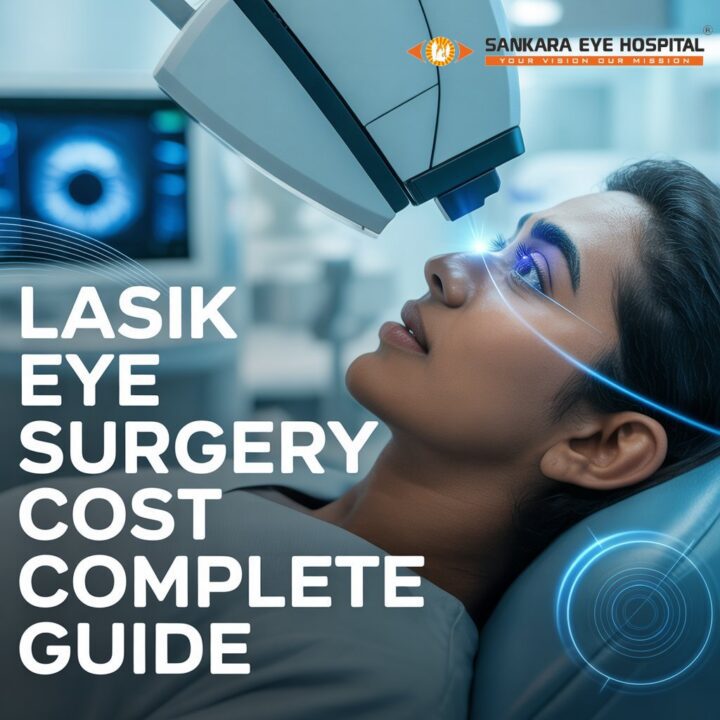
Laser eye surgery is a seamless, outpatient process designed for maximum patient safety and comfort:
- Comprehensive Diagnostic Mapping: Precise scans gather thousands of optical data points to create your custom treatment plan.
- Eye Preparation: Numbing eye drops are applied so you do not feel pain during the
- Flap Creation & Laser Reshaping: A thin protective corneal flap is The high-speed excimer laser then gently reshapes the underlying tissue according to your individualized mapping profile in just a few seconds.
- Recovery: The flap is set back in place, where it adheres naturally without stitches. Most patients notice clearer vision almost immediately, with complete functional recovery within a day.
Is LASIK Right for You?
While modern laser vision correction is safer and more precise than ever, candidacy is key. You are generally a good candidate if you:
- Are 21 years or older.
- Have a stable glass prescription
- Have healthy corneas and no significant underlying eye
Consulting with an experienced refractive surgeon and undergoing thorough diagnostic mapping is the best way to determine if advanced laser vision correction is safe and suitable for your eyes. Hope for your question ” is lasik eye surgery safe ” is answered.
Click Here Know about the Latest Lasik Technology available at Sankara Eye Hospitals.